If you want to build an email list from scratch, you need more than a signup form buried in your website footer. You need a clear reason for people to subscribe, a simple system for collecting email addresses, and a repeatable way to get the right visitors in front of your offer.
In this step-by-step guide, you’ll learn how to build an email list from zero — even if you don’t have an existing audience, a paid ad budget, or a complicated marketing setup. We’ll cover how to choose an email platform, create a lead magnet, set up your landing page and welcome emails, get your first subscribers, and turn your email list into a long-term business asset.
If you’re a blogger, creator, freelancer, coach, or small business owner trying to grow an audience you actually own, this is the process to follow.
Why Building an Email List Matters
An email list is one of the few marketing assets you truly own.
Your Instagram followers, LinkedIn audience, YouTube subscribers, and even your search traffic all depend on platforms you do not control. Algorithms change. Reach drops. Accounts get suspended. Search rankings move. But when someone joins your email list, you have a direct communication channel that isn’t dependent on a social platform deciding whether your content gets seen.
That matters because email is still one of the highest-converting digital channels available. When someone gives you their email address, they’re not passively scrolling past your content — they’re actively choosing to hear from you again.
A strong email list helps you:
- build trust with readers over time
- drive repeat traffic back to your website
- promote products, services, or affiliate offers
- launch a newsletter, course, or digital product
- reduce your dependence on social media and search volatility
If you want a long-term audience and a more stable online business, learning how to build an email list isn’t optional. It’s foundational.
What You Need to Build an Email List
Before you get into the tactics of how to build an email list, it helps to understand the four core parts of a simple list-building system.
1. An email service provider
This is the software that stores subscriber information, sends your emails, hosts forms and landing pages, and runs automations.
2. A signup offer
People usually don’t subscribe because you ask them to “join the newsletter.” They subscribe because there’s a clear benefit. That benefit might be a lead magnet, free guide, checklist, template, email course, or a highly specific newsletter promise.
3. A landing page or opt-in form
You need a place where people can actually subscribe. This could be a dedicated landing page, an inline form inside blog posts, a popup, or a signup section on your homepage.
4. A traffic source
Even the best signup page won’t grow your list if nobody sees it. You need a way to attract relevant visitors through SEO, social content, guest posts, YouTube, partnerships, direct outreach, or another traffic channel.
Once those four pieces are in place, email list growth becomes much more predictable.
How to Build an Email List from Scratch: Step-by-Step
Now let’s walk through the complete process of building your email list from the ground up.
Step 1: Choose an Email Marketing Platform
Before you collect your first subscriber, you need an email service provider (ESP). This is the tool that will manage your email list, host your forms, send your newsletters, and automate your welcome emails.
What to look for in an email platform
If you’re a blogger, creator, freelancer, or small business owner, look for an email platform that includes:
- signup forms and landing pages
- welcome email automation
- subscriber tagging or segmentation
- a clean, beginner-friendly interface
- a free or low-cost starter plan
- easy integration with WordPress or your website
Popular tools for building an email list
Several platforms can work well, including MailerLite, Beehiiv, Mailchimp, and Kit.
If you’re building a creator-focused newsletter or trying to grow an email list from scratch without a complicated setup, Kit (formerly ConvertKit) is one of the easiest platforms to start with. It’s built for creators rather than enterprise marketing teams, and it handles the core pieces of email list building in one place: forms, landing pages, welcome emails, automations, and subscriber management.
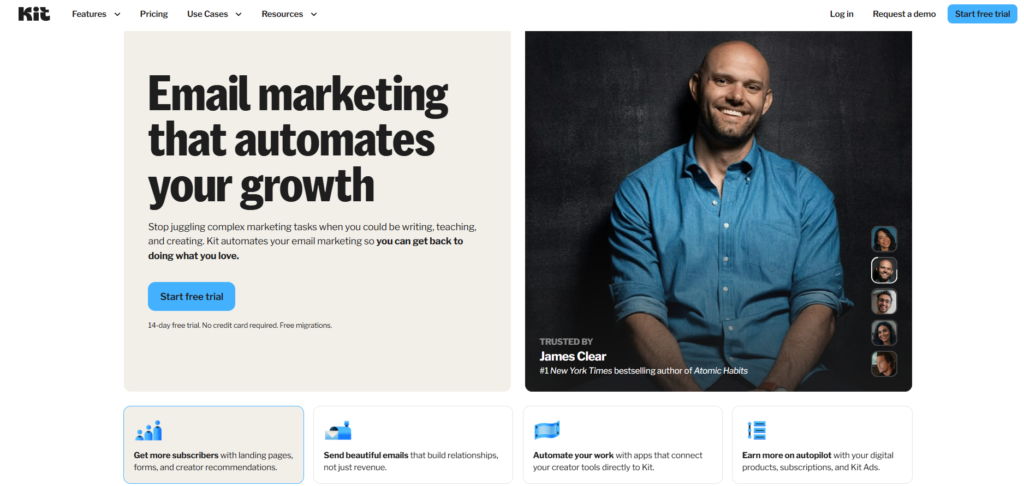
That matters because when you’re starting from zero, the goal isn’t to stitch together five different tools. The goal is to get your signup system live quickly and improve it over time.
If you want the simplest all-in-one setup for building an email list, Kit is a strong place to start. If you’d like to compare it with other options first, read our guide to the best email marketing platforms for creators.
Step 2: Create a Dedicated Landing Page
If you want to build an email list efficiently, create a dedicated landing page instead of relying only on a generic form in your footer or sidebar.
A landing page works because it removes distractions. Instead of sending people to a page full of menus, links, and competing calls to action, you send them to one focused page with one job: convert the visitor into a subscriber.
What to include on your landing page
A high-converting email signup page should be simple, clear, and benefit-driven. At minimum, it should include the following elements.
A clear headline
Your headline should explain what the subscriber gets and why it matters.
Weak example: Subscribe to my newsletter
Stronger example: Get one practical SEO tip every Thursday to grow your blog traffic faster
The second version is better because it’s specific, benefit-driven, and gives the visitor a reason to care.
A short supporting description
Use two or three sentences to explain:
- who the newsletter or free resource is for
- what subscribers will receive
- how often you’ll email
- what result or outcome they can expect
A simple signup form
Ask for the minimum amount of information needed. In most cases, that means just an email address. If you want a first name field for personalization, that’s fine — but every extra field creates friction and lowers conversion rates.
A strong CTA button
Replace generic button text like “Subscribe” or “Submit” with something that reflects the value of the offer.
Examples:
- Send me the checklist
- Get the free guide
- Join the newsletter
- Start the email course
Optional trust signals
If you have them, add one or two trust elements such as:
- a subscriber count
- a testimonial
- logos of brands you’ve worked with
- a one-line authority statement
Goal for this step: publish one landing page that clearly explains your offer and makes subscribing easy.
Step 3: Create a Lead Magnet People Actually Want
If you want to grow your email list faster, a lead magnet is one of the most effective tools available.
A lead magnet is a free resource you offer in exchange for someone’s email address. It gives people a concrete reason to subscribe now instead of “maybe later.”
What makes a strong lead magnet
The best lead magnets solve one specific problem for one specific person.
This is where many email list-building efforts fail. People create broad, vague resources that sound impressive but aren’t immediately useful. A lead magnet converts best when it helps one specific person solve one specific problem quickly.
Strong lead magnet ideas
Checklist
Example: Blog Post SEO Checklist: 25 Things to Check Before You Hit Publish
Why it works: it’s practical, easy to consume, and immediately useful.
Template or swipe file
Example: 5 Welcome Email Templates for New Subscribers
Why it works: the subscriber can use it immediately without starting from scratch.
Content upgrade
A content upgrade is a lead magnet tied to a specific blog post. If someone is reading your article about welcome emails, you might offer a downloadable welcome email template inside that article.
Content upgrades often convert better than generic site-wide offers because they’re directly relevant to what the reader is already interested in.
Mini guide or short ebook
Example: How to Get Your First 100 Email Subscribers
Why it works: it’s useful when your audience needs more explanation than a checklist can provide.
Mini email course
Example: 5-Day Email List Building Bootcamp
Why it works: it builds engagement over several days and gets new subscribers used to opening your emails.
What makes a weak lead magnet
Avoid lead magnets that are:
- too broad
- generic or low-value
- disconnected from your niche
- hard to consume quickly
- created around what you want to make rather than what the reader urgently wants solved
A 50-page “ultimate guide to marketing” is usually a worse lead magnet than a 2-page checklist that solves a narrow problem well.
Goal for this step: create one lead magnet that directly supports your newsletter topic, content strategy, or business offer.
Step 4: Set Up a Welcome Email Sequence
Your welcome email is one of the most important emails you’ll ever send.
New subscribers are most engaged right after they join your list. That first email sets the tone for the relationship and often determines whether they open future emails, click your links, and trust your recommendations.
If someone subscribes and receives nothing useful — or just gets a generic “thanks for joining” email with no direction — you waste the moment of highest attention.
What your welcome email should include
1. Deliver the promised resource immediately
If you offered a checklist, guide, template, or email course, the first email should deliver it right away.
2. Introduce yourself briefly
Explain who you are, who the newsletter is for, and why you’re qualified to help on this topic. Keep it short and relevant.
3. Set expectations
Tell subscribers what kind of emails you send and how often they can expect to hear from you.
4. Ask one question
A simple question like “What is your biggest challenge with email marketing right now?” can generate replies, improve engagement, and give you direct audience research.
Example welcome email structure
A simple welcome email can follow this structure:
- short thank-you
- link to the promised resource
- brief introduction
- expectations for future emails
- one reply-driving question
You can keep it to one email at first, then expand it into a short onboarding sequence later.
Why I like using Kit for this
This is one of the places where Kit is especially useful. You can create a landing page, deliver your lead magnet, and send an automated welcome email from the same dashboard — without needing a separate automation tool or plugin stack.
If you want to set up your landing page + lead magnet + welcome sequence in one place, Try Kit
Step 5: Add Opt-In Forms in the Right Places
A landing page is important, but it shouldn’t be the only place people can subscribe.
If your blog posts, homepage, and high-traffic pages don’t include relevant opt-in forms, you’re missing easy opportunities to grow your email list.
Best places to put email signup forms
1. Inside blog posts
Add an inline opt-in form near the top of the article after the introduction, especially if you have a content upgrade related to that post.
2. At the end of blog posts
Readers who reach the end of an article are highly engaged. This is one of the best places to offer a relevant lead magnet or newsletter signup.
3. On your homepage
If your newsletter is a core part of your business, the homepage should make that obvious. Add a clear signup section above the fold or early on the page.
4. In a popup or slide-in
Used carefully, popups can work well — especially exit-intent popups that appear when a visitor is about to leave. The offer needs to be specific and genuinely useful, not just “join my newsletter.”
5. On your about page or resource pages
People who visit your about page are often trying to understand who you are and whether they should trust you. A signup form here can work surprisingly well.
Match the offer to the page
The closer the signup offer matches the content someone is reading, the higher your conversion rate is likely to be.
For example:
- article about SEO → offer an SEO checklist
- article about email marketing → offer welcome email templates
- article about freelancing → offer a client onboarding template
Relevance matters more than fancy design.
Goal for this step: place your email signup forms where your readers already spend time.
Step 6: Get Your First 100 Email Subscribers
Once your signup system is in place, the next challenge is getting people to actually see it. Some of the top ways to grow an email list include personal outreach, SEO content, social media promotion, and partnerships.
If you’re starting from zero, focus on small, high-leverage distribution channels rather than trying to go viral.
1. Start with personal outreach
Your first subscribers don’t need to come from strangers.
Reach out to people in your existing network who would genuinely benefit from your newsletter or resource. This could include:
- past clients
- friends in your industry
- LinkedIn connections
- social followers who already engage with your content
- people who have asked you related questions before
Don’t spam people or add them without permission. Send a short personal message explaining what you’re building and why you thought it might be relevant to them.
This is one of the fastest ways to get your first 10 to 30 subscribers.
2. Promote your lead magnet on social media
Don’t just post a signup link and ask people to subscribe. Instead, share useful ideas from your newsletter or lead magnet so people can preview the value.
Examples:
- turn one checklist point into a LinkedIn post
- share one lesson from your newsletter on X
- make a short Instagram carousel summarizing a framework from your guide
- record a short video explaining one mistake your lead magnet helps solve
Then invite people to get the full resource by joining your list.
3. Add your signup link everywhere
Make it easy for interested people to subscribe by placing your email signup link in:
- your social media bios
- your YouTube descriptions
- your LinkedIn featured section
- your email signature
- your author bio
- relevant guest posts
4. Use partnerships and guest content
One of the fastest ways to grow an email list is to borrow trusted distribution from people who already have your audience.
You can do that through:
- guest posts
- podcast interviews
- newsletter swaps
- webinar collaborations
- resource roundups
5. Publish SEO content
SEO isn’t the fastest way to get your first subscribers, but it’s one of the best long-term systems for steady email list growth.
When you publish articles that rank in Google for topics your ideal subscriber is already searching for, those articles become ongoing subscriber acquisition channels.
You can place a relevant content upgrade and opt-in form inside the post. That way, your SEO traffic doesn’t just generate pageviews — it generates subscribers.
Goal for this step: get your first 100 subscribers through a combination of outreach, distribution, and content.
If you are starting from zero, read how to start a newsletter first.
Step 7: Use Email Automation to Increase Subscriber Value
Once people join your list, the next job is to keep them engaged.
This is where email automation becomes useful. Automation means subscribers receive the right emails automatically based on what they signed up for, what they clicked, or how engaged they are. Even a simple setup can improve retention and help subscribers move from “new reader” to “engaged fan.”
Useful email automations to set up
Welcome sequence
A short sequence that introduces your brand, delivers your lead magnet, and points new subscribers to your best content.
Onboarding sequence
A series of emails that helps new subscribers understand what you do, what problem you solve, and where to go next.
Lead magnet follow-up sequence
If someone downloads a checklist or template, send one or two follow-up emails that help them use it and naturally lead into your newsletter or paid offer.
Re-engagement sequence
If subscribers haven’t opened or clicked your emails in a long time, send a short sequence asking whether they still want to hear from you.
Why automation matters
Without automation, every new subscriber gets the same experience only if you manually keep up with it. With automation, every subscriber gets a useful onboarding experience whether they join today, next month, or six months from now.
If your goal is to build an email list without wrestling with a complicated automation tool, using a platform that includes welcome sequences, subscriber tags, and simple automations will make the process much easier.
Why Kit is a strong fit here
If your goal is to build an email list without wrestling with a complicated automation tool, Kit is one of the easiest platforms to start with. It lets you create welcome sequences, subscriber tags, and simple automations without making the setup feel overwhelming.
If you want to build your email list and automate the subscriber journey in one place, start with Kit
Step 8: Keep Your Email List Healthy
Building an email list is only half the job. A good list isn’t just large — it’s engaged.
A smaller list of subscribers who open, click, and reply is far more valuable than a bloated list full of inactive contacts.
Metrics to watch
Open rate
This tells you how many people are opening your emails. It’s not a perfect metric, but it’s still useful as a directional signal.
Click rate
This shows how many subscribers are clicking links in your emails. If people open but never click, your content or offers may not be compelling enough.
Unsubscribe rate
A small number of unsubscribes is normal. But if unsubscribes spike, it may be a sign that your content doesn’t match what people expected when they joined.
Spam complaints
This is critical. If people mark your emails as spam, your deliverability can suffer quickly.
Bounce rate
Hard bounces should be removed automatically by your email platform. Too many bounces can hurt sender reputation.
Clean your list regularly
If someone hasn’t opened or clicked your emails for months, consider sending a re-engagement campaign. Ask whether they still want to hear from you, offer a compelling reason to stay, and remove inactive subscribers who never respond.
This protects your deliverability and keeps your metrics honest.
One rule: never buy an email list
Buying email lists is one of the fastest ways to damage your sender reputation, reduce engagement, and create spam complaints. Build your list organically, even if it takes longer.
Goal for this step: maintain a list of engaged subscribers rather than chasing vanity metrics.
Step 9: Turn Your Email List Into Revenue
Once you have an engaged email list, it can become one of your most valuable business assets.
You do not need tens of thousands of subscribers to make money. What matters more is relevance, trust, and the fit between your audience and your offer.
Common ways to monetize an email list
Affiliate marketing
Recommend products or tools you genuinely trust and use. If subscribers buy through your link, you earn a commission.
Digital products
Sell templates, ebooks, mini-courses, workshops, or paid resources that solve a problem for your audience.
Services
If you offer coaching, consulting, freelancing, or done-for-you services, your email list can become a consistent source of leads.
Sponsorships
If you run a niche newsletter with an engaged audience, brands may pay to reach your subscribers.
Memberships or communities
A newsletter can also become the entry point into a paid community, mastermind, or subscription product.
The key is not to rush monetization before trust exists. The best email lists make recommendations that feel helpful, timely, and aligned with what the subscriber already wants.
Why we recommend Kit
Kit is built specifically for creators and audience-driven businesses. Instead of feeling like enterprise email software repackaged for small users, it is designed around the actual workflow of growing an audience.
With Kit, you can:
- create landing pages without a separate page builder
- build inline forms and popups for your website
- send welcome email automations
- tag and segment subscribers as your list grows
- deliver lead magnets automatically
- manage subscriber journeys from one dashboard
If you want a closer look at how Kit works for creators, read our full Kit review to see its features, pricing, and best use cases.
Common Email List Building Mistakes to Avoid
Even a solid email list strategy can underperform if the fundamentals are weak. Here are some of the most common mistakes to avoid.
1. Hiding your signup form
If visitors have to hunt for your form, many will never subscribe. Make the offer visible and easy to access.
2. Offering a weak lead magnet
Generic resources don’t convert well. Solve one narrow problem instead.
3. Skipping the welcome email
The first email matters more than most people realize. Use it well.
4. Asking for too much information
Every extra form field creates friction. Keep signup simple.
5. Emailing only when you want to sell
If subscribers only hear from you when you want something, they’ll stop opening your emails.
6. Ignoring list quality
A large list with poor engagement can hurt deliverability and create misleading metrics.
7. Choosing traffic channels that don’t fit your audience
You don’t need to be everywhere. Focus on the channels where your ideal subscribers already pay attention.
Frequently Asked Questions About Building an Email List
How do I build an email list for free?
You can build an email list for free by using an email marketing platform with a free plan, creating a simple landing page, offering a lead magnet, and promoting it through your blog, social profiles, and personal network. Many creators get their first subscribers without spending money on ads.
What is the best lead magnet for email list growth?
The best lead magnet solves one specific problem for one specific audience. Checklists, templates, content upgrades, mini guides, and short email courses are all strong options when they’re tightly aligned with the subscriber’s immediate need.
How do I grow an email list without social media?
SEO content, guest posts, podcast appearances, newsletter partnerships, and direct referrals can all help grow your email list without relying on social media. If your articles rank in Google and include relevant signup offers, search traffic can become a long-term subscriber source.
Should I use double opt-in?
Double opt-in can improve list quality because subscribers must confirm their email address before joining. This often leads to a cleaner, more engaged list. Single opt-in can increase conversion rate, but double opt-in is often better for deliverability and subscriber quality.
How often should I email my list?
Email your list as often as you can consistently provide value. For many creators and bloggers, once per week is a strong starting point because it keeps you top of mind without overwhelming subscribers. Consistency matters more than frequency.
How many email subscribers do I need to make money?
There’s no fixed number. A focused list of 500 to 1,000 engaged subscribers can generate meaningful income through services, affiliate marketing, digital products, or sponsorships if the audience is specific and trusts your recommendations.
Is email still worth it?
Yes. Social platforms are useful for discovery, but email remains one of the most reliable owned channels for building relationships, driving traffic, and generating revenue without depending on algorithms.
Final Thoughts: Start Before You Feel Ready
If you’re waiting until you have the perfect website, the perfect lead magnet, or the perfect newsletter strategy, you’re waiting too long.
The best way to build an email list is to start with a simple system:
- choose an email platform
- create one clear signup offer
- publish one landing page
- set up one welcome email
- promote the offer consistently
- improve it as you learn what your audience responds to
You don’t need a huge audience to make email worthwhile. You need a useful offer, a repeatable traffic source, and the discipline to keep showing up.
If you want the simplest way to get your forms, landing pages, lead magnet delivery, and welcome emails running in one place, Kit is the platform I recommend starting with.